Context:
The 2018 Winter Olympics has presented itself as one of the most overtly political Olympics in decades. The creation of a unified Korean Olympic team as result of Kim Jong-un’s charm offensive has led to a thawing of tensions between the two countries following the heated rhetoric and provocations of 2017. The North, in a highly symbolic move, sent Kim’s sister, Kim Yo-jong, as part of its delegation to South Korea. Kim Yo-jong stole the international spotlight as she met with South Korea’s Unification minister Cho Myoung Gyon and subsequently invited South Korean President Moon Jae-In to Pyongyang for talks.
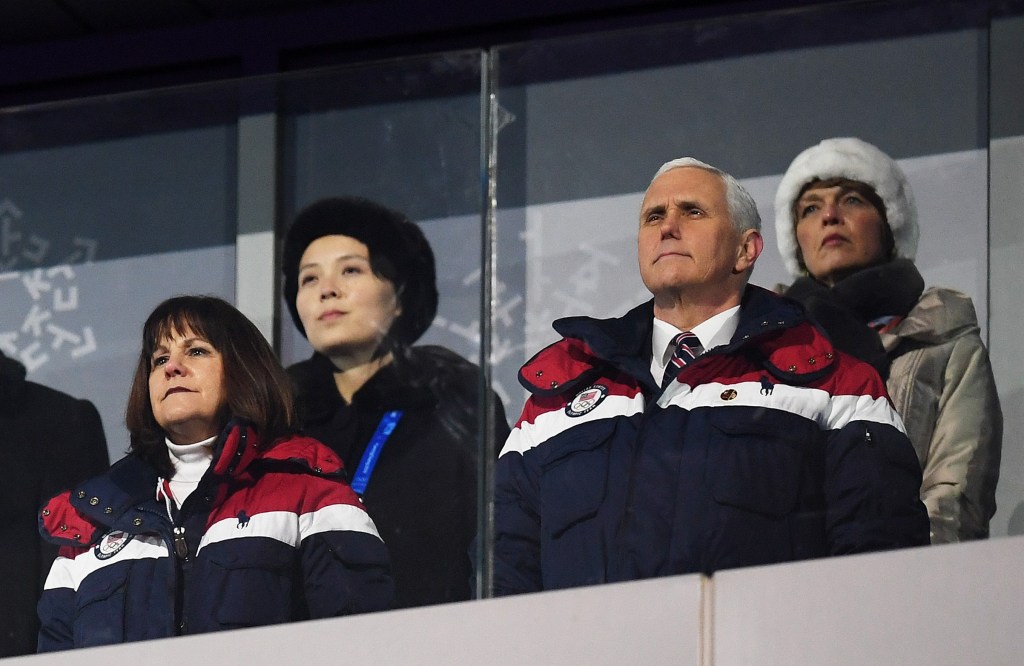
In the opposite corner, U.S. Vice President Mike Pence represented the United States at the Olympic opening ceremony. Pence was accompanied by Fred Warmbier — the father of Otto Warmbier, the American student whose 17-month coma at the hands of the North Koreans ultimately became fatal. Pence acted coldly to North Korea, as he refused to stand for the Unified Korean Olympic delegation at the opening ceremony and skipped a dinner hosted by President Moon before the opening ceremony. Pence reportedly did not interact with Kim Yo-jong.
Analysis:
Pence initially drew criticism for refusing to stand and support the Unified Korean delegation during the opening ceremony. Proponents of this argument believe that Pence represented the stereotypical, infamous U.S. bully and, consequently, played right into North Korean hands by not supporting their South Korean allies. Further, they argue that the American position would not have been lessened by his showing support, and his actions will only have negative consequences for the U.S.-Korean relationship.
This belief is misguided.
President Moon has been outspoken in his support for North-South reconciliation. Moon has put particular emphasis on the Winter Olympics as a way to ease relations with the North. Following Kim Jong-un’s New Year’s speech where he expressed an openness to North Korea’s participation in the Winter Games and an easing of tensions, Moon quickly offered a postponement of joint U.S.-Korean war games in an attempt to entice Kim Jong-un.
Throughout these negotiations, analysts were quick to highlight Kim’s ultimate goal behind his extending the olive branch: Drive a wedge between the U.S. and South Korea. Kim understood that President Moon was desperate for the Pyeongchang Olympics to be an overwhelming success for diplomatic and financial reasons. Kim’s decision to only invite President Moon to Pyongyang — excluding the United States — only confirms this view.
Pence gave North Korea the cold shoulder. This posturing was highly warranted. Overt support for North Korea’s charm offensive would have played directly into North Korean hands and fit neatly into the North Korean narrative: The citizens of North and South Korea are brethren, it is the United States that is the outsider and ultimate enemy. To counter this perception, Pence sat next to President Moon and Japanese Prime Minister Shinzo Abe during the ceremony. The three, sitting arm to arm, were highly symbolic of the solidarity the three nations have shown in confronting North Korea. Pence kept the spotlight where it needed to be — refusing to acknowledge the North as a legitimate member of the international community and highlighting the repressive regime that sits behind this temporary charm offensive (symbolized through Fred Warmbier’s presence). Further, it allows the South Korean political right to maintain pressure on President Moon for being too conciliatory to Pyongyang and harming the South’s relationship with the United States.
Importantly, Pence’s dismissive reaction to the North’s presence prevented North Korea from receiving the legitimacy that it deeply craves and kept the spotlight on the underlying tension that surrounds the Korean crisis. Meanwhile, the domestic South Korean political battle will be on full display when President Moon decides to either accept Kim’s invitation to Pyongyang — with the support of his reconciliatory left and the condemnation of the right — or reject it out of deference to maintaining a consistent message with United States and applying maximum pressure on the North Korean regime.
It is also key to remember that this Korean détente is temporary. On February 8, the North hosted a military parade, showing off its military prowess. The weapons and missiles shown were meant to demonstrate the North’s current military capabilities should a war break out, rather than weapons in development or missiles that had previously failed their tests such as the Hwasong-10 and Hwasong-13. The North’s capability to decimate Seoul is real and will not disappear anytime soon. In addition, resumption of joint U.S.-Korean war drills will almost certainly draw a North Korean response and potential escalation of tension. Lastly, don’t forget those pesky, nuclear tipped ICMB’s that the North is aiming for and President Trump’s supposed red line to prevent it.
Bottom line: Kim Yo-jong won the immediate term PR battle, Pence’s actions – though they may appear ungracious – were the right geopolitical and strategic move for our times.
 Gradually Then Suddenly