On February 5, 2018 the Maldives were thrown into political turmoil. President Abdulla Yameen declared a 15-day state of emergency and called for the arrests of former President Maumoon Abdul Gayoom (Yammer’s half brother) and Supreme Court Chief Justice Abdulla Saeed.
Yameen’s political power play was in response to an unfavorable Supreme Court ruling on February 2 that voided previous convictions of nine politicians and ordered a subsequent retrial. The ruling meant that Yameen’s party would hand over its congressional majority to the opposition. Further, one of the nine politicians given a retrial is another former Maldives President, Mohamed Nasheed ,who ruled from 2008-2012; Nasheed is currently in Britain, where he was given asylum following his 2015 conviction in Maldives Court — a conviction many consider a politically-motivated sham.
Nasheed has called upon India to send an envoy, backed by military force, to restore order in the Maldives. Many believe that Nasheed would attempt to return to power following an Indian intervention.
The Bigger Game
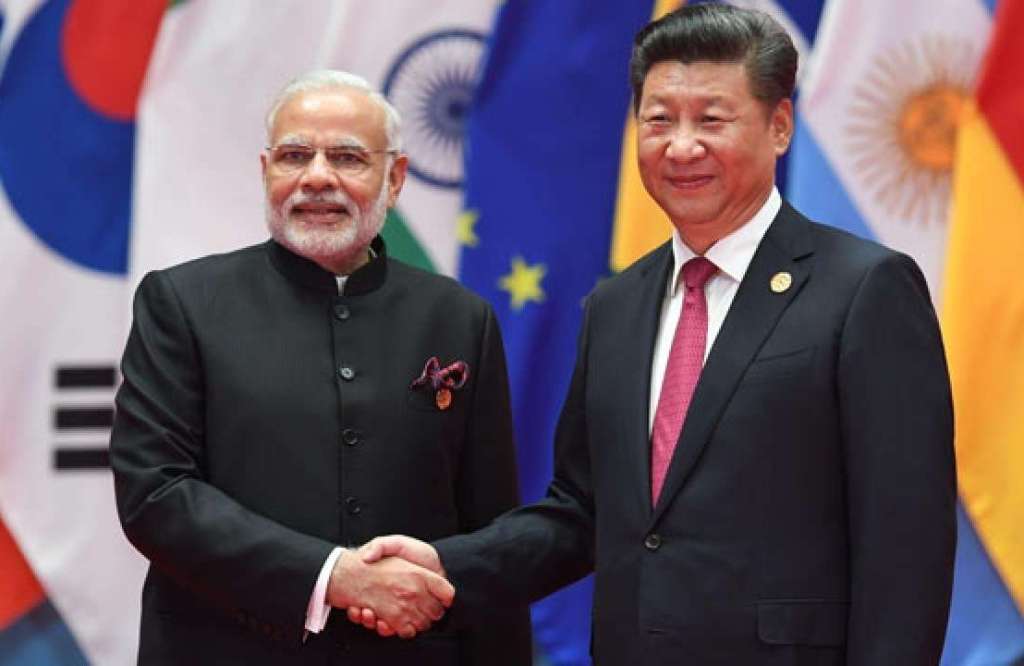
Like many smaller countries in Asia, the Maldives – a stunning archipelago sitting in the Indian Ocean – has become the newest battleground between India and China for influence. The Maldives is part of a South Asia area that India considers to fall within its sphere of influence. But the Maldives represent a strategically significant location between the Gulf of Aden and the Strait of Malacca, both key shipping and energy routes. For China, which has aggressively expanded its naval operations and sought to protect its strategic shipping lanes, the Maldives represent an opportunity to expand influence and project power in areas traditionally accepted to fall within India’s domain.
India fears Chinese encirclement. For the Maldives situation specifically, this means India cannot accept even a temporary Chinese naval base in the Maldives. Conversely, China’s primary interest (given no international backlash or subsequent retaliation) would be continued economic dominance of the Maldives and access to key ports.
Official Positions and the Game Thus Far
Currently, India has rejected a military option in the Maldives out of fear that any heavy handed tactic would reinforce the narrative of India as a domineering hegemon, openly willing to use force against smaller neighbors. Given India’s comparative disadvantage in economic and fiscal power to the Chinese, it is unclear how Delhi will seek to shape the Maldives in accordance with Indian interests: interests defined as a friendly Maldivian government willing to push back against Chinese investment that will presumably lead to a continued Chinese Naval presence.
Beijing senses weakness from India and believes it has the upper hand. The formal Chinese position has been one of non-interference in the Maldives domestic spat. This stance is the result of favorable recent trends in the Chinese-Maldives relationship that included a free-trade agreement, allowing the Maldives to export fish into the world’s second largest economy. Further, China has invested additional capital into the Maldives through its Belt and Road initiative.
Beyond this public stance, China has recently increased its naval presence in the region, a move widely interpreted to deter Indian military action in the Maldives.
What’s Next?
It is unclear how the tense situation in the Maldives will play out. India views increased Chinese influence in South Asia — and potential encirclement — as a top national security concern. These fears are well founded as China has gained access to bases in Pakistan and Sri Lanka. One also should not forget the 2017 standoff in Bhutan, where Indian troops were sent to prevent Chinese construction workers from extending a roadway through disputed territory. Consequently, a permanent Chinese naval base in the Maldives would be a devastating loss for India in the larger Great Power competition currently occurring between India and China.
China currently holds the upper hand, but it is too early to tell which camp the Maldives will find itself once everything is said and done.
 Gradually Then Suddenly