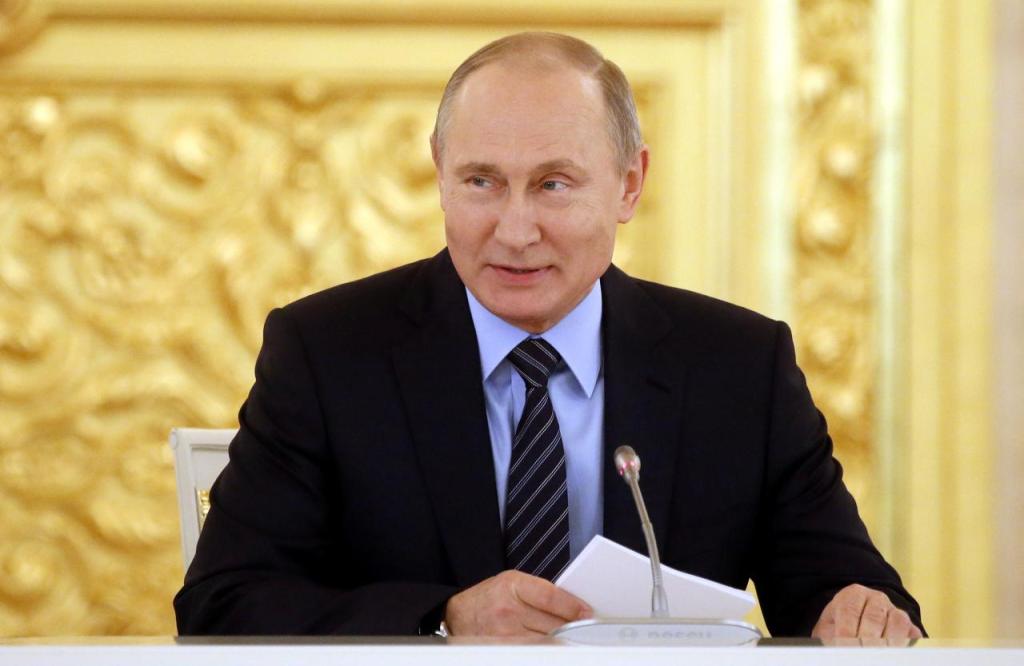
On March 18, 2018 Vladimir Putin was re-elected to a fourth term as Russia’s President, and the result surprised no one. Putin went above and beyond to ensure election success, including charging prominent opposition figure Alexei Navalny with fraud months before the election and barring him from the ballot. Navalny claimed the charges were politically motivated (they surely were). The result was a sham Russian election with no real opposition party capable of challenging Putin.
But, Navalny and the opposition did try to throw one wrench into the election: Calling for a boycott to deny the election’s legitimacy. To ensure legitimacy and a clear mandate to rule, Putin aimed for an election with a 70% voter turnout and wanted 70% of the vote to be cast for him. While voter turnout only reached 67.5%, Putin secured a resounding victory with nearly 77% of the vote. Even with reports of ballot stuffing, Putin received his clear mandate.
When Putin’s term ends in 2024, he will have been in power for nearly a quarter century (including time as Prime Minister when his handpicked ally, Dmitry Medvedev, served as President). Not only will this make Putin the longest Russian leader since Stalin, but an entire generation of Russians will know nothing other than Putin’s Russia.
Two Big Questions
Putin’s re-election leads to two big questions:
- What will Putin’s policies be in this upcoming term?
- How is Putin planning for succession – if he is at all?
These two questions are, of course, highly related.
Policies: For the small campaign that Putin actually ran, he promised his constituents guns and butter. This promise (the same that brought down the USSR) will be hard, if not impossible, to fulfill. Low oil prices and kleptocratic practices (if not policies) has left the Kremlin strapped for cash. Additionally, Putin has put stress on the Russian economy by redesigning it to be more self-sufficient and consequently more resilient to Western sanctions. Putin’s promise to simultaneously have and eat cake seems a recipe for disaster.
What seems likely in Putin’s upcoming term is an aggressive foreign policy and a renewed arms race with the United States. Indeed, it seems already to have begun. Putin recently unveiled comical videos of low altitude, nuclear tipped missiles that could pierce Western missile defenses. They were cartoonish, but Putin’s point was clear: Russia is not to be messed with. He also flaunted nuclear tipped torpedoes that can cross the Pacific Ocean and devastate the US West coast. This bellicose activity has occurred while Putin has increasingly sought to play king maker in the Middle East and a proxy war in Ukraine.
How does this tie to the election? These international actions play very well domestically.
Russian citizens yearn for the lost respect they feel they commanded during the Cold War. Putin’s popularity has risen handsomely through asserting Russia as a Great Power with global power projection capabilities. Putin’s foreign policy as an active participant and spoiler in global affairs is likely to continue.
The sad tradeoff for an aggressive foreign policy is a lack of substantial change at home. Russians are unlikely to see the necessary reforms needed to fix Russia’s social safety net and create an internationally competitive economy. Further, domestic policies will be greatly influenced by Putin’s plans for a post-Putin Russia (whenever that might occur) and the establishment of his legacy.
Succession: With Putin beginning what is supposed to be his final term as President, creating a safe transition to a post-Putin world, and securing a positive, successful legacy will be a high priority for Putin. His selection of cabinet officials and other government administrators over the coming months will provide important signals of who he wants to act as main players in a Russia without him. Separately, Putin has also begun integrating a younger generation of pro-Putin Russians into leadership positions. This younger generation represents a continuation of Putin’s political thought and influence in Russian government for, likely, decades to come. But, conversely, for entrenched elites this new generation pose a threat to their own wealth, ambitions and power. The elders consequently view them with suspicion.
Of course, it is certainly possible Putin may seek to abolish Presidential limits and remain Russia’s leader. Indeed, President Xi Jinping of China recently abolished term limits to ensure his continued stay in power. Putin is only 65, relatively young in 2018 terms. These factors lead me to believe that Putin’s continuation in power by abolishing term limits is his most likely course of action.
Takeaways
Even though Russia’s elections were anything but fair, Putin received a large mandate. He promised guns and butter throughout the campaign, but that is an unrealistic policy objective. Instead, expect Putin to continue military adventures abroad and watch as Russian elites jockey for position as they prepare for a post-Putin world – whenever that may be.
 Gradually Then Suddenly