As the Syrian Civil War continues to rage as one of the greatest humanitarian disasters of our time, fatigue and resignation has overcome the international community. Syria is a quagmire with global powers intervening, attempting to secure their interests:
- Russia seeks to uphold its image as a global superpower and project power in the Middle East;
- Iran seeks to establish military bases and missile sites to threaten Israel;
- Turkey is attempting to clear Kurdish forces from its border.
Through it all, Assad has maintained his position as the head of Syria and expects to continue his role into the foreseeable future.
U.S. policy towards Syria has been essentially non-existent. The Trump administration has failed to: 1) articulate a coherent long-term strategy that would serve to reassure allies of America’s commitment; 2) communicate to adversaries where our interests may clash, 3) and inform the American electorate why we have troops in Syria and what we’re hoping to accomplish. Instead, the Trump administration has been sporadic and unreliable with policy changing minute to minute, tweet to tweet. On April 3, it was reported that Trump had indicated his desire for a complete American withdrawal from Syria – catching his aides, military advisors, and the world off guard. It is unclear if Trump meant what he said, but the American president’s words have weight, and the world heard him loud and clear.
On April 4, Assad once again used chemical weapons against his own people, killing some 70 people and injuring hundreds more. The attack’s timing was no mere coincidence; Assad understood that Trump was not willing to invest American blood and treasure in Syria. But Assad also understood Trump’s words on a deeper level: The Assad regime is here to stay, and the West won’t challenge it.
Assad used chemical weapons to demonstrate again to those rebelling against his rule that no one was coming to save them. Following the attack, Syria placed its important military assets in Russian bases to force the American military to hit Russian military personnel and equipment if it sought to damage the Syrian force. Such a strike would almost guarantee a large escalation of the conflict and put the U.S. and Russia in a direct state of war. It does not take a genius to know the American public is not looking for an all out war over Syria.
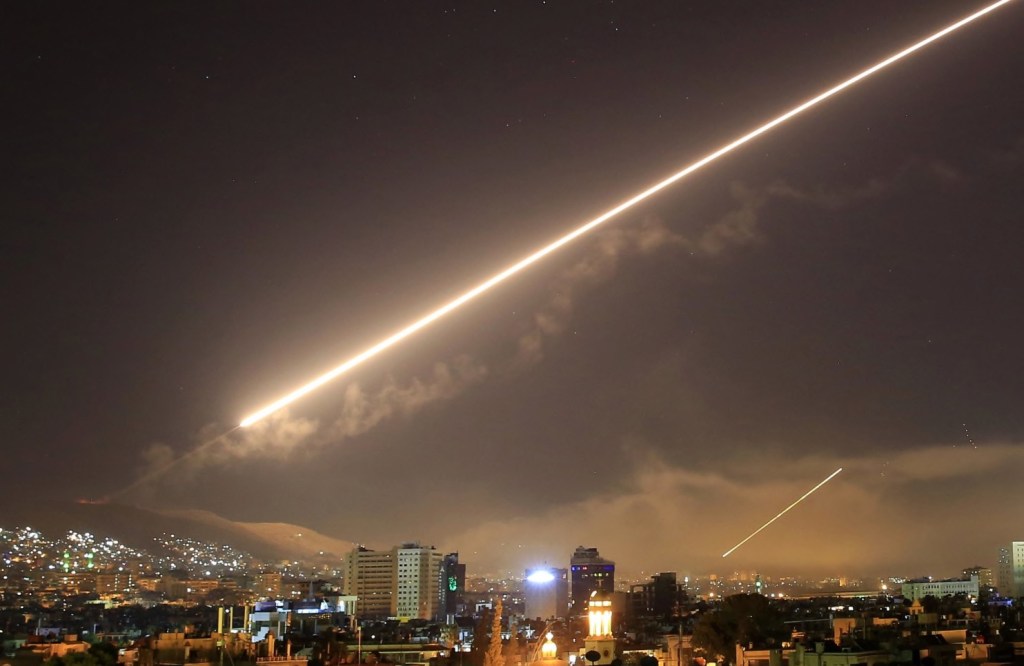
The joint strike by U.S., British, and French forces targeted strategic facilities, such as chemical weapon production sites and aircraft shelters. The strikes did nothing to cripple the Assad regime or its allies. While the strikes were successful insofar as they upheld the norm of punishing those who use chemical weapons, that was their only true success (as well as avoiding civilian casualties). Assad confirmed that his regime is safe. He showed the rebels that they are fighting on their own, and that he is free to systematically murder any resistance as long he uses conventional weapons.
The Trump administration has also failed to outline a broader Syrian strategy following the strikes. No one can know for sure what he’ll do next, but many believe the strike to be a one off against the usage of chemical weapons. Until a broader, more coherent long term strategy emerges (if ever), don’t expect much to change in Syria. Trump may increase pressure on Iranian gains in Syria, but not much more.
The chemical weapons were Assad’s way of showing the world that nearly a year after his last large scale use of chemical weapons, he’s still in power and safer than ever.
 Gradually Then Suddenly